FORT HUACHUCA, Ariz. – Leadership from the Defense Threat Reduction Agency (DTRA) conducted a high-level site visit to Joint Task Force-Southern Border (JTF-SB) on March 24, 2026, to identify technical solutions for countering evolving security threats along the U.S. southern border.
DTRA’s Acting Director, U.S. Air Force Major General Lyle Drew, joined by Sergeant Major Daniel Mangrum and DTRA technical advisors, met with U.S. Army Major General David Gardner, Commanding General of JTF-SB and the 101st Airborne Division, at Fort Huachuca. The engagement focused on the technical complexities of subterranean tunnel detection and mitigation, a critical challenge for border integrity.
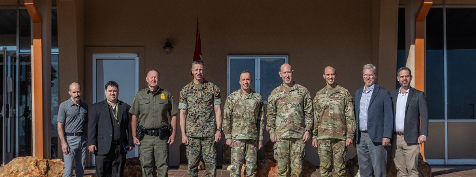
Figure 1: U.S. Air Force Maj. Gen. Lyle K. Drew, DTRA’s Acting Director (center) and U.S. Army Maj. Gen. David Gardner, Commanding General of JTF-SB and the 101st Airborne Division, (center right) and others met at the Southern Border on March 24, 2026. Pictured also from left to right: Mr. Edmun Doray, USNORTHCOM J8/S&T, Mr. Tiller Miller, DTRA RD, Border Patrol Chief Jeffrey Dinise, COL Trevor S. Voelkel, JTF-SB Chief of Staff, Pete Lofy, DTRA USNORTHCOM and USSPACECOM CCR, Steve Murga, DTRA Director’s Action Group.
"Our visit underscores the importance of applying DTRA’s specialized research and development tools to real-world operational challenges," said Maj. Gen. Drew. "By integrating our RD-CB (Research and Development) and Sensitive Activity Advisor (SAA) teams into the JTF-SB mission, we can provide the advanced sensing and detection capabilities necessary to stay ahead of sophisticated threats."
While primary border enforcement is managed by the Department of Homeland Security, DTRA provides the "Smart Wall" and other border initiatives with advanced CBRN (Chemical, Biological, Radiological, and Nuclear) detection technologies designed to prevent the illicit trafficking of weapons of mass destruction and related materials. By integrating these high-tech sensors and providing expert training to border personnel, DTRA ensures that the U.S. Southern Border is equipped to identify and neutralize emerging non-traditional threats before they enter the country.
To assess the physical environment where these technologies exist, the team conducted a helicopter survey of the rugged Nogales, Arizona, sector, hosted by U.S. Customs and Border Protection (CBP). The aerial perspective, combined with ground-level insights from DTRA SAAs who surveyed the area the previous day, provided a comprehensive data set for future agency support. The visit concluded at Davis-Monthan Air Force Base with a technical roundtable hosted by Brig. Gen. Maurizio Calabrese, Commanding General of the Joint Interagency Task Force-Counter Cartel (JIATF-CC).
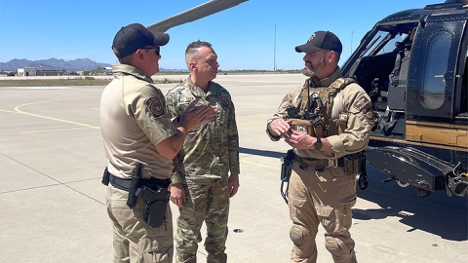
Figure 3: Maj. Gen. Drew is briefed by Border Patrol Officers before viewing the area from above.
The discussion centered on synchronizing DTRA’s counter-threat expertise with the needs of various federal law enforcement partners.
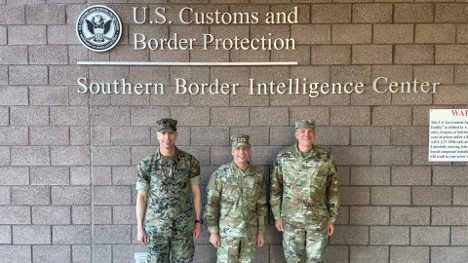
Figure 2: Sergeant Major Daniel Mangrum, DTRA’s Command Senior Enlisted Leader, along with U.S. Air Force Maj. Gen. Lyle K. Drew, DTRA’s Acting Director (center) and U.S. Air Force Brig. Gen. Maurizio Calabrese, (right) Commanding General of the Joint Interagency Task Force-Counter Cartel (JIATF-CC) met on March 24, 2026.
Moving forward, DTRA plans to conduct follow-on engagements at key ports of entry. These efforts will focus on deploying R&D assets to enhance situational awareness and provide JTF-SB with the technological edge required to fulfill its mission under the "Protecting the American People Against Invasion" executive order.